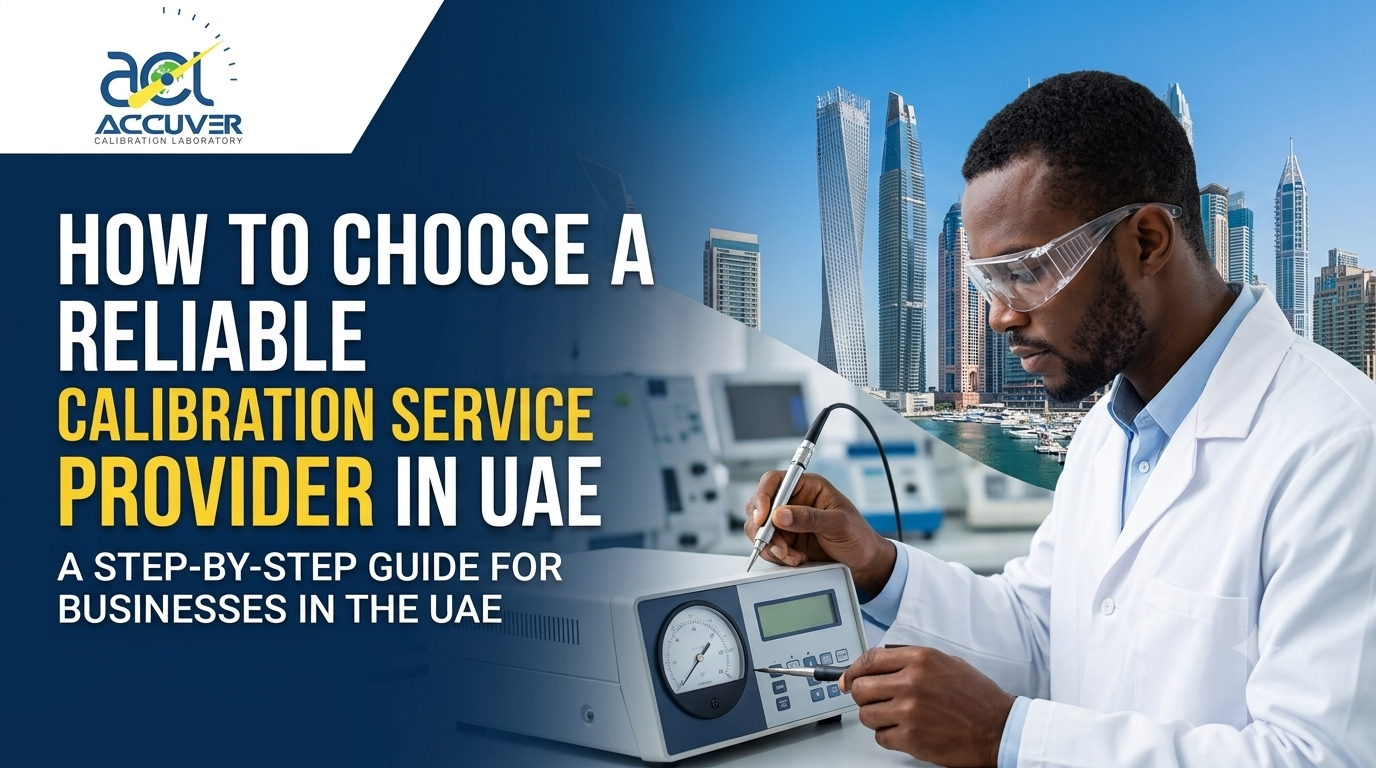
1. Introduction: Why Choosing the Right Calibration Provider Matters
In modern industrial facilities, accurate measurement is essential for maintaining product quality, operational safety, and process efficiency. Pressure gauges, temperature sensors, flow meters, torque instruments, electrical testers, and analytical equipment all support important decisions across production and maintenance operations. Even a small measurement error can affect product performance, equipment reliability, and overall operational control.
This is why choosing the right calibration service provider in UAE is an important decision for industrial businesses. A reliable provider does more than compare instruments against reference standards. It helps organizations maintain measurement confidence, manage calibration records, identify potential accuracy issues, and support quality management requirements.
For businesses operating in Dubai, Abu Dhabi, Sharjah, and other industrial areas of the UAE, calibration services must be selected according to technical requirements, instrument types, operating conditions, and applicable industry standards. The right calibration partner can support both routine calibration needs and more complex measurement challenges.
ACCUVER Calibration provides professional calibration solutions designed to support industrial measurement accuracy, equipment reliability, and effective calibration management. By working with a suitable calibration provider, businesses can build a more organized and dependable approach to instrument performance.
2. What Makes a Reliable Calibration Service Provider?
Not every calibration provider offers the same technical capabilities, instrument coverage, or documentation quality. Before selecting a company, businesses should evaluate several important factors.
2.1 Technical Competence and Industry Experience
Calibration requires a clear understanding of measurement principles, instrument operation, reference standards, and applicable calibration procedures. A provider should have personnel with suitable technical knowledge and experience with the instruments being calibrated.
For example, calibrating a pressure transmitter requires a different approach from calibrating a torque wrench, temperature sensor, or analytical balance. Each instrument may have different measurement ranges, accuracy requirements, operating conditions, and testing procedures.
An experienced calibration company should be able to understand the customer’s requirements and recommend a suitable calibration method. Technical competence also helps identify abnormal results, possible instrument damage, and measurement conditions that may affect the final outcome.
2.2 Accreditation and Recognised Standards
Accreditation is an important factor when choosing a calibration laboratory. ISO/IEC 17025 is an internationally recognised standard for the competence of testing and calibration laboratories.
A laboratory accredited to ISO/IEC 17025 has been assessed against relevant requirements for technical competence, impartiality, consistent operations, and management systems. However, accreditation applies to the activities included within the laboratory’s approved scope.
Businesses should therefore check whether the provider’s accreditation covers the specific instrument category, measurement range, and calibration activity they require. A general statement that a company is accredited is not enough to establish that every service is covered.
For industrial customers in the UAE, reviewing accreditation information can help support better supplier evaluation and measurement assurance.
2.3 Suitable Reference Standards and Equipment
Reliable calibration depends on suitable reference standards and measurement equipment. These standards should be appropriate for the instrument under calibration and maintained through a documented calibration system.
For example, a temperature sensor may require a suitable temperature reference, while a pressure instrument may require a calibrated pressure source and reference measurement device. The reference equipment must have suitable performance characteristics for the intended calibration.
A professional provider should be able to explain the reference standards used, the calibration method followed, and the relevant measurement conditions. This information helps customers understand how their instrument results are established.
2.4 Clear and Complete Calibration Certificates
A calibration certificate is an important record of the work performed. It should provide enough information for the customer to identify the instrument, understand the calibration results, and review the supporting measurement information.
Depending on the applicable requirements and calibration procedure, a certificate may include:
- Customer and laboratory identification.
- Instrument name, model, and serial number.
- Certificate number and calibration date.
- Calibration method or reference procedure.
- Measurement points and observed results.
- Reference standards used.
- Measurement uncertainty, where applicable.
- Environmental conditions, where relevant.
- Traceability information.
- Authorized approval and relevant technical remarks.
Clear documentation makes it easier for quality teams, maintenance departments, and auditors to review calibration records. It also helps businesses maintain better control over their instrument history.
2.5 On-Site and Laboratory Calibration Options
Industrial facilities may require calibration at their own premises or within a controlled laboratory environment. The most suitable option depends on the instrument, measurement requirements, site conditions, and operational schedule.
On-site calibration can be useful when instruments are difficult to transport, installed within production systems, or critical to continuous operations. It may help reduce equipment handling and transportation-related disruption.
Laboratory calibration can be suitable when controlled environmental conditions, specialised equipment, or detailed measurement procedures are required. Certain instruments may benefit from the facilities and technical resources available in a laboratory.
A reliable calibration service provider should explain the available options and help the customer select an appropriate approach.
3. Why Calibration Standards and Accreditation Matter in the UAE
The UAE has a wide range of industrial sectors, including manufacturing, oil and gas, construction, utilities, healthcare, food processing, and engineering services. These industries use measurement instruments to control processes, verify product quality, and support operational safety.
The importance of calibration depends on the application, instrument criticality, customer specifications, and applicable regulatory or industry requirements.
3.1 Supporting Measurement Confidence
Calibration helps identify the relationship between an instrument’s readings and a suitable reference standard. The results provide information about the instrument’s measurement performance under defined conditions.
This information allows businesses to make better decisions about whether an instrument is suitable for its intended application. It can also help identify measurement drift or deviations that require further investigation.
3.2 Understanding Measurement Uncertainty
No measurement is completely free from uncertainty. Measurement uncertainty describes the range of doubt associated with a measurement result under defined conditions.
A suitable calibration report should present uncertainty information when required by the relevant procedure, accreditation scope, or customer needs. Understanding uncertainty helps engineers and quality teams interpret results more effectively.
For example, an instrument may show a small deviation from a reference value. Whether that deviation is acceptable depends on the instrument’s specifications, the required tolerance, and the uncertainty associated with the measurement.
3.3 Supporting Quality and Audit Requirements
Many industrial businesses maintain calibration records as part of their quality management systems. These records can help demonstrate that measurement equipment is identified, monitored, and maintained according to documented procedures.
Calibration certificates, instrument registers, scheduled calibration plans, and corrective action records can support audit preparation. However, calibration alone does not guarantee compliance with every regulatory or customer requirement.
Businesses should always confirm the specific documentation and technical requirements applicable to their industry and operations.
4. Key Factors to Consider Before Choosing a Calibration Company
Selecting a calibration provider requires more than comparing prices. The company should be able to deliver technically suitable services while meeting the customer’s operational requirements.
4.1 Instrument Coverage
First, identify the instruments that require calibration. This may include pressure gauges, transmitters, flow meters, temperature probes, torque tools, electrical instruments, weighing equipment, and other measurement devices.
Ask the provider whether the required instrument types, ranges, and measurement parameters are included within its service capabilities. This helps avoid delays or the need to engage multiple providers for the same calibration program.
4.2 Calibration Turnaround Time
Industrial operations often depend on the availability of critical instruments. Extended service times can affect maintenance schedules, production planning, and equipment availability.
Before confirming a calibration service, discuss the expected turnaround time, instrument quantity, site requirements, and any urgent operational needs. A clear service schedule helps both the customer and provider plan the work more effectively.
4.3 Service Location and Accessibility
For businesses operating across Dubai, Abu Dhabi, Sharjah, and other parts of the UAE, service accessibility is an important consideration.
A provider offering suitable on-site services may help reduce transportation requirements. Laboratory services may be more appropriate for instruments that require controlled conditions or specialised calibration facilities.
Customers should confirm the locations served, travel arrangements, site access requirements, and any additional service conditions before scheduling calibration.
4.4 Calibration Records and Customer Support
A professional calibration company should maintain clear communication throughout the service process. Customers should understand which instruments are being calibrated, what information is required, and how the final documentation will be delivered.
Digital records, instrument identification, calibration history, and organised certificates can help maintenance and quality teams manage their equipment more effectively.
4.5 Repair and Technical Support
Calibration may identify instruments that require adjustment, investigation, or repair. A provider with relevant repair capabilities can help customers understand the next steps after an instrument produces an unsatisfactory result.
However, calibration and repair are separate activities. A calibration certificate should clearly distinguish the measurements performed before or after any adjustment or repair, as applicable.
5. ACCUVER Calibration: A Reliable Calibration Partner in the UAE
ACCUVER Calibration supports businesses that require professional measurement and calibration services for industrial and commercial applications. The company focuses on helping customers maintain dependable instrument performance through suitable calibration procedures, technical support, and clear service documentation.
A calibration program should be designed around the customer’s instrument population, operating environment, measurement requirements, and maintenance schedule. ACCUVER Calibration works to support these needs through calibration solutions suited to the relevant service scope.
For businesses searching for a calibration company in UAE, selecting a provider with suitable technical capabilities and a clear service approach can help improve measurement management and operational confidence.
The right calibration partner should provide more than a certificate. It should help customers understand their measurement requirements, maintain records, identify potential instrument issues, and plan future calibration activities.
6. Calibration Services in Dubai and Across the UAE
Industrial businesses may use several types of measuring instruments across their production, quality, maintenance, and engineering departments. Calibration requirements depend on the instrument category and the specific measurement application.
Relevant calibration services may include:
Pressure Calibration
Pressure calibration supports instruments such as pressure gauges, pressure transmitters, and other pressure measurement devices. The process compares the instrument’s readings against suitable reference equipment at defined measurement points.
Temperature Calibration
Temperature calibration helps assess the performance of temperature sensors, probes, thermometers, and related instruments. It is important for applications where temperature control affects product quality, equipment performance, or process stability.
Flow Calibration
Flow calibration supports the evaluation of flow meters and related measurement devices. Accurate flow measurement can be important in industrial processing, utilities, water systems, and other applications.
Torque Calibration
Torque calibration helps verify the performance of torque wrenches, torque testers, torque transducers, and suitable torque measurement equipment. It supports precision tightening and quality control in relevant industrial applications.
Electrical and Other Instrument Calibration
Electrical calibration may include suitable electrical measurement instruments, depending on the provider’s technical scope. Other calibration services may cover weighing instruments, analytical equipment, dimensional instruments, and additional measurement devices.
Customers should confirm the exact instrument categories, measurement ranges, service locations, and applicable accreditation scope before selecting a calibration service.
7. Frequently Asked Questions
What should I check before choosing a calibration service provider in UAE?
Review the provider’s technical competence, accreditation scope, instrument coverage, reference standards, calibration certificates, turnaround time, and service locations. Also confirm whether the company can support your specific instrument types and measurement requirements.
Is ISO/IEC 17025 accreditation important for industrial calibration?
ISO/IEC 17025 accreditation provides evidence that a laboratory has been assessed against relevant requirements for calibration laboratory competence. Customers should check whether the specific service they require is included within the laboratory’s accredited scope.
Should I choose on-site or laboratory calibration?
The choice depends on the instrument, measurement requirements, operating conditions, transportation limitations, and production schedule. On-site calibration may be convenient for installed instruments, while laboratory calibration may be suitable for specialised or controlled measurement work.
How often should industrial instruments be calibrated?
Calibration frequency depends on instrument criticality, usage, environmental conditions, manufacturer guidance, historical results, and applicable requirements. A risk-based approach can help businesses establish suitable calibration intervals.
Can calibration identify instruments that need repair?
Calibration results may reveal measurement deviations or other issues that require further investigation. If repair is necessary, the instrument should be assessed and, where applicable, calibrated again after repair.
8. Conclusion: Choose Confidence with Professional Calibration
Choosing a reliable calibration service provider in UAE is an important step toward maintaining measurement accuracy, operational stability, and effective quality management. Businesses should evaluate technical competence, accreditation scope, instrument coverage, reference standards, documentation quality, and service flexibility before making a decision.
A suitable calibration partner can help organizations manage their instruments more effectively, reduce measurement-related uncertainty, and maintain better control over calibration records.
ACCUVER Calibration provides calibration solutions for businesses seeking professional support in Dubai and across the UAE. Whether you require on-site calibration, laboratory services, or support for a planned industrial calibration program, understanding your measurement needs is the first step toward selecting the right service.
Contact ACCUVER Calibration to discuss your instrument requirements and explore suitable calibration services for your industrial operations in the UAE.