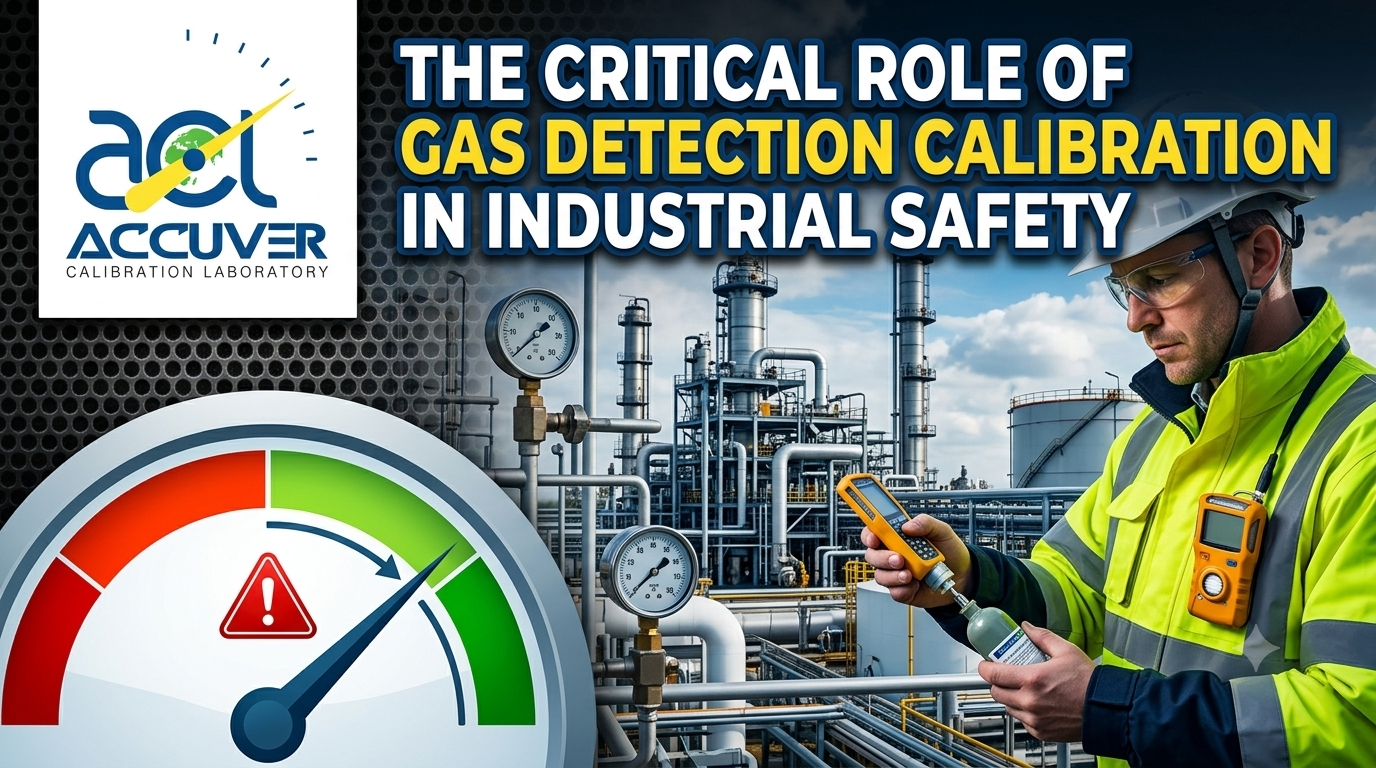
Introduction: Why Gas Detection Calibration Matters
Industrial workplaces often involve gases that can create serious safety risks. Combustible gases may cause fires or explosions, while toxic gases can affect employee health. Oxygen deficiency can also create dangerous conditions in confined spaces, tanks, pipelines, and industrial facilities.
Gas detection systems help identify these risks before they become serious incidents. However, a gas detector is only useful when it provides accurate readings and responds correctly to dangerous gas levels. This is why gas detection calibration is an essential part of industrial safety management.
Regular calibration helps confirm that gas detection instruments are measuring gas concentrations correctly. It also supports reliable alarm performance, improves worker protection, and helps businesses maintain proper equipment records.
For companies operating in Dubai and other parts of the UAE, professional gas detector calibration Dubai services can support safer industrial operations, maintenance programs, inspections, and internal safety procedures.
What Is Gas Detection Calibration?
Gas detection calibration is the process of checking and adjusting a gas detection instrument against a known reference gas concentration.
A gas detector contains sensors designed to identify specific gases. Depending on the instrument, it may detect:
- Oxygen levels
- Combustible gases
- Hydrogen sulfide
- Carbon monoxide
- Ammonia
- Chlorine
- Volatile organic compounds
- Other toxic or hazardous gases
Over time, sensor performance can change because of age, exposure, temperature, humidity, contamination, vibration, or regular use. As a result, the detector may show readings that are higher or lower than the actual gas concentration.
During calibration, the instrument is tested using suitable reference gases and approved procedures. If required, adjustments are made so the instrument can provide more accurate results within its specified operating range.
Calibration is different from a simple visual inspection. An instrument may look clean and undamaged but still provide inaccurate measurements.
Why Gas Detection Calibration Is Important for Industrial Safety
1. Helps Protect Workers
Gas detectors are commonly used in areas where employees may be exposed to toxic, combustible, or oxygen-deficient atmospheres.
An inaccurate detector may fail to identify a dangerous condition or may provide a false alarm. Reliable gas detection calibration helps improve confidence that the instrument is responding correctly when workers need it most.
Although calibration cannot remove every workplace hazard, it supports a stronger safety system when combined with proper ventilation, personal protective equipment, emergency procedures, and employee training.
2. Improves Measurement Accuracy
Gas detection instruments must measure gas concentrations within their specified accuracy limits. Sensor drift can affect the reliability of the displayed reading.
For example, a detector designed to identify a low concentration of a toxic gas may show an incorrect value if its sensor has deteriorated. This could result in an unsafe decision or unnecessary shutdown.
Professional gas detector calibration UAE services help businesses identify measurement errors and maintain better control over their monitoring equipment.
3. Supports Reliable Alarm Performance
Many gas detectors include visual, audible, and vibration alarms. These alarms are designed to alert workers when gas levels reach defined limits.
Calibration helps confirm that the detector responds correctly to reference gas concentrations. It also supports the reliability of alarm activation during testing.
However, alarm testing and calibration should not be treated as exactly the same activity. A detector may activate an alarm during a basic test but still require full calibration to confirm measurement accuracy.
4. Reduces the Risk of False Readings
Incorrect gas readings can create two major problems:
- A dangerous gas concentration may not be detected.
- A false alarm may interrupt production or cause unnecessary evacuation.
Both situations can affect business operations and workplace safety. Regular calibration helps reduce measurement uncertainty and supports more dependable gas monitoring.
5. Supports Safety Audits and Documentation
Industrial businesses often need to maintain records for equipment inspections, maintenance, safety reviews, and customer requirements.
A proper calibration certificate may include:
- Instrument identification
- Manufacturer and model
- Serial number
- Gas type used for calibration
- Reference gas concentration
- Calibration date
- Calibration method or procedure
- As-found results
- As-left results, where applicable
- Measurement results
- Environmental conditions
- Technician or authorized personnel details
- Relevant technical remarks
Maintaining accurate records supports industrial safety calibration Dubai requirements and helps businesses demonstrate that their safety instruments are being managed systematically.
Types of Gas Detection Equipment That Require Calibration
Different gas detection systems have different operating methods and calibration needs.
Portable Gas Detectors
Portable gas detector calibration is important for instruments carried by workers into potentially hazardous areas.
Portable detectors may be used in:
- Confined spaces
- Oil and gas facilities
- Chemical plants
- Construction sites
- Storage tanks
- Maintenance areas
- Wastewater facilities
- Industrial workshops
These devices may be single-gas or multi-gas instruments. Multi-gas detectors can monitor several atmospheric conditions at the same time, such as oxygen, combustible gases, and toxic gases.
Because portable detectors are frequently moved, dropped, exposed to dust, or used in different environments, their condition and calibration status should be monitored carefully.
Fixed Gas Detection Systems
A fixed gas detection system calibration process applies to detectors installed permanently in industrial or commercial locations.
Fixed systems may be installed near:
- Gas storage areas
- Chemical processing equipment
- Fuel systems
- Boiler rooms
- Battery charging areas
- Production lines
- Compressor rooms
- Hazardous material storage areas
Fixed detectors are connected to control panels, alarms, ventilation systems, or other safety equipment. Calibration should consider both the sensor and the wider detection system where applicable.
The location of the sensor is also important. A properly calibrated detector may still provide limited protection if it is installed in an unsuitable position or if airflow patterns prevent gas from reaching the sensor.
Single-Gas Detectors
Single-gas detectors are designed to monitor one specific gas. They are often used where a particular hazard is already known.
Examples include detectors designed for:
- Carbon monoxide
- Hydrogen sulfide
- Oxygen
- Combustible gases
The calibration process must use the correct reference gas and suitable concentration for the detector.
Multi-Gas Detectors
Multi-gas detectors monitor more than one gas or atmospheric condition. Each sensor may have different calibration requirements.
For example, an instrument may include sensors for:
- Oxygen
- Combustible gases
- Carbon monoxide
- Hydrogen sulfide
Each channel should be checked according to the manufacturer’s instructions and the applicable calibration procedure.
How Gas Detection Calibration Is Performed
The exact process depends on the detector model, sensor type, gas being measured, and manufacturer’s instructions. A typical professional process may include the following steps.
1. Instrument Identification
The technician first records the instrument details, including the manufacturer, model, serial number, sensor configuration, and current calibration status.
This information helps maintain traceable equipment records and prevents confusion between similar instruments.
2. Visual and Physical Inspection
The detector is checked for visible damage, contamination, blocked sensor openings, damaged displays, worn cables, battery issues, and other physical problems.
If the instrument is damaged, calibration may not be suitable until the issue has been assessed or repaired.
3. Zero Check
A zero check confirms the detector’s response under the appropriate zero or clean-air condition.
The correct zeroing method depends on the sensor and instrument design. Zeroing should not be performed incorrectly in an environment that may already contain hazardous gas.
4. Span Calibration
Span calibration checks the instrument’s response against a known concentration of reference gas.
The reference gas must be suitable for the detector and within the required validity period. The technician introduces the gas using an appropriate calibration setup and compares the instrument response with the known concentration.
If necessary, the detector is adjusted according to the approved procedure.
5. Alarm and Response Checks
The instrument may be checked to confirm that its visual, audible, and vibration alarms respond as expected.
This may include verifying alarm thresholds, display behavior, and response time. The exact checks depend on the instrument and the service requirements.
6. Documentation and Calibration Status
After testing, the results are recorded. The instrument may receive a calibration label or updated status record, depending on the business’s equipment control process.
Any limitations, failed results, sensor issues, or recommendations should be clearly documented.
Calibration vs. Bump Testing: What Is the Difference?
A bump test and a calibration check are related, but they are not identical.
Bump Test
A bump test is a short functional test used to confirm that a gas detector responds to gas and activates its alarms as expected.
It generally checks whether the detector reacts to the test gas.
Calibration
Calibration compares the detector’s measurement response against a known reference gas concentration. It may also involve adjustment when the instrument is outside the acceptable tolerance.
In simple terms:
- Bump testing checks whether the detector responds.
- Calibration checks and, where required, adjusts measurement accuracy.
A bump test does not automatically replace a complete calibration. Businesses should follow the detector manufacturer’s instructions and their own safety procedures for both activities.
Factors That Affect Gas Detector Calibration Frequency
There is no single calibration interval that is suitable for every gas detector. The required frequency depends on several factors.
Manufacturer’s Recommendations
The manufacturer’s instructions should be the starting point for determining calibration intervals. Different sensors and detector models have different operating characteristics.
Frequency of Use
Equipment used every day may experience more wear and exposure than instruments used occasionally. Frequent use may require closer monitoring of calibration status.
Exposure to Hazardous Conditions
Repeated exposure to high gas concentrations, chemicals, dust, moisture, or extreme temperatures may affect sensor performance.
Sensor Age
Sensors may deteriorate over time. Older sensors should be assessed carefully, especially if they show unstable readings or repeated calibration failures.
Previous Calibration Results
If an instrument has shown significant drift or repeated failures, the business may need to review its calibration frequency.
Accidents or Unusual Exposure
A detector should be inspected after being dropped, exposed to unusually high gas concentrations, contaminated, repaired, or subjected to extreme environmental conditions.
The final calibration schedule should be based on manufacturer guidance, risk assessment, operating conditions, and the organization’s safety management system.
Common Problems Found During Gas Detection Calibration
Professional testing may identify several issues, including:
- Sensor drift
- Expired or damaged sensors
- Blocked sensor openings
- Incorrect gas configuration
- Weak batteries
- Damaged sample lines
- Contamination
- Incorrect alarm settings
- Expired reference gas
- Poor storage conditions
- Software or display faults
- Slow sensor response
- Failure to return to zero
Identifying these problems early can help prevent unreliable readings during critical operations.
Why Choose ACCUVER Calibration for Gas Detection Services?
ACCUVER Calibration supports businesses that require dependable measurement equipment and organized calibration documentation.
For companies looking for gas detector calibration Dubai or gas detector calibration UAE services, a professional calibration partner can help with:
- Instrument identification and inspection
- Gas detector calibration support
- Reference gas testing
- Calibration result documentation
- Calibration status tracking
- Identification of sensor or instrument issues
- Support for industrial measurement equipment
- Calibration planning for business operations
The exact service scope, available gas types, instrument models, and accreditation status should be confirmed before scheduling the service. Calibration should always be performed using suitable equipment, valid reference standards, and procedures appropriate to the instrument.
Related Calibration Services in Dubai and the UAE
Industrial businesses may require several measurement services in addition to gas detection calibration. Depending on their equipment and operating environment, related services may include:
- Pressure calibration
- Temperature calibration
- Flow calibration
- Torque calibration
- Electrical calibration
- Dimensional calibration
- Analytical instrument calibration
- On-site calibration services
- Laboratory calibration services
- Calibration documentation and equipment records
A coordinated calibration program can help businesses manage different instruments through a structured schedule instead of treating each device as a separate activity.
Frequently Asked Questions
1. What is gas detection calibration?
Gas detection calibration is the process of checking and, when necessary, adjusting a gas detector against a known reference gas concentration to improve measurement accuracy.
2. Why is gas detector calibration important?
It helps confirm that the detector provides dependable readings and responds correctly to known gas concentrations. This supports worker safety, alarm reliability, equipment management, and audit documentation.
3. Is bump testing the same as calibration?
No. A bump test checks whether the detector responds to test gas and activates its alarms. Calibration checks the accuracy of the detector’s measurement response and may involve adjustment.
4. How often should gas detectors be calibrated?
The frequency depends on the manufacturer’s recommendations, usage, environmental exposure, sensor condition, previous results, and the organization’s risk assessment.
5. Can portable gas detectors be calibrated on-site?
Some portable gas detectors can be tested or calibrated on-site using suitable equipment and reference gases. The available service depends on the instrument model and the technician’s approved procedure.
6. Do fixed gas detection systems require calibration?
Yes. Fixed gas detection systems require appropriate inspection, testing, and calibration according to the manufacturer’s instructions and the operating risk of the facility.
7. What should a gas detector calibration certificate include?
It should normally include instrument identification, calibration date, reference gas details, test results, relevant procedures, technician or laboratory information, and technical remarks where applicable.
8. Does calibration guarantee complete workplace safety?
No. Calibration supports accurate gas monitoring, but workplace safety also requires proper ventilation, maintenance, emergency planning, training, risk assessment, and suitable protective measures.
Conclusion
Gas detection instruments play an important role in protecting workers and industrial facilities from toxic gases, combustible gases, and oxygen-related hazards. However, their performance can change over time because of usage, sensor ageing, contamination, and environmental conditions.
Regular gas detection calibration helps businesses maintain more reliable measurements, support alarm performance, identify sensor problems, and maintain proper safety records. Both portable and fixed gas detection systems should be managed through a suitable inspection and calibration program.
For businesses seeking gas detector calibration Dubai, gas detector calibration UAE, or broader industrial safety calibration Dubai services, ACCUVER Calibration can support a structured approach to measurement equipment management.
Contact ACCUVER Calibration to discuss your gas detection equipment, calibration requirements, and suitable service options for your industrial operations.