Introduction: Why Medical Equipment Calibration Matters
Medical equipment plays an important role in diagnosis, treatment, monitoring, and patient care. Devices such as patient monitors, infusion pumps, blood pressure instruments, weighing scales, thermometers, and other medical systems must provide dependable measurements.
An inaccurate medical instrument may lead to an incorrect clinical decision, an unsuitable treatment setting, or a delay in identifying a patient’s condition. For this reason, healthcare organizations must maintain their equipment through regular inspection, preventive maintenance, testing, and calibration.
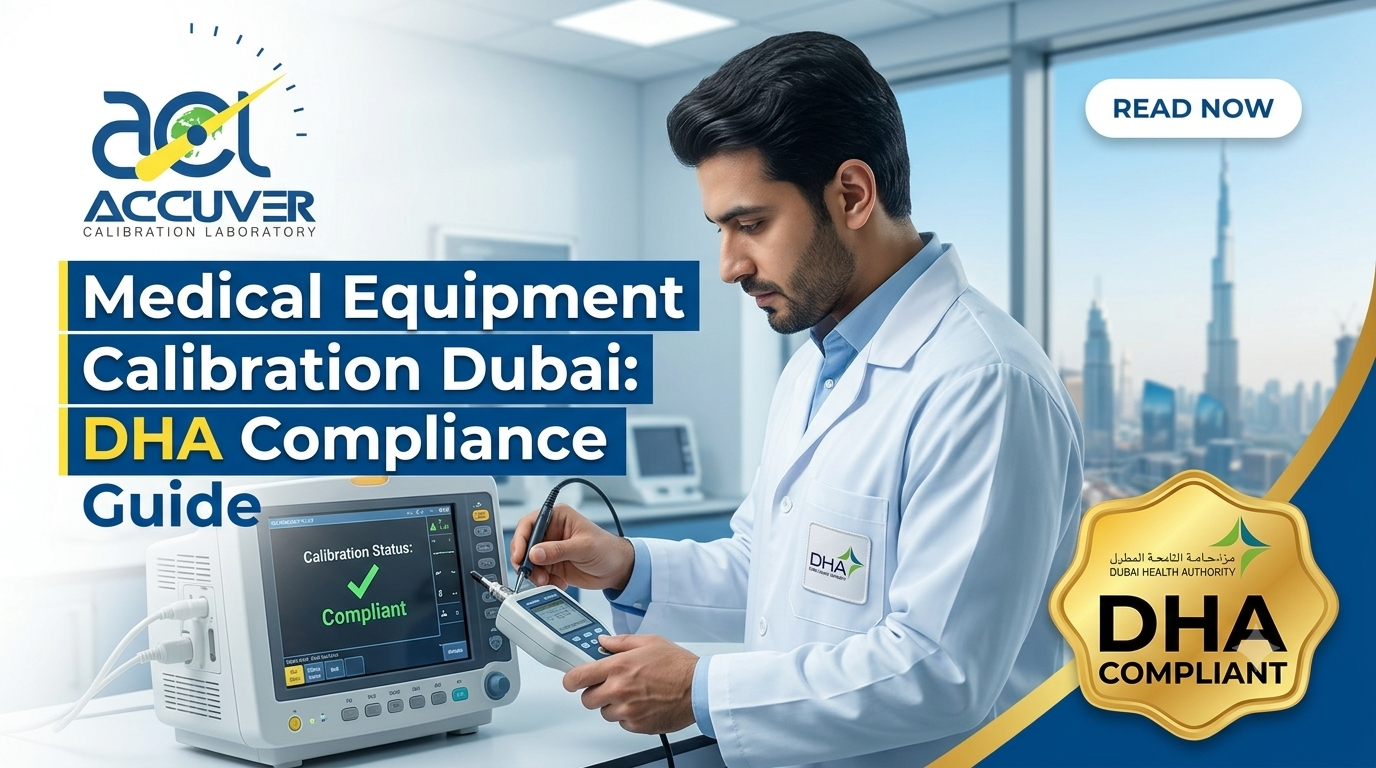
Medical equipment calibration Dubai services help healthcare facilities verify whether their instruments are operating within the required accuracy limits. Calibration also supports equipment documentation, quality management, internal audits, and patient safety programs.
In Dubai and across the UAE, healthcare providers should ensure that their calibration activities align with applicable regulatory expectations, manufacturer instructions, facility procedures, and the specific requirements of the relevant healthcare authority.
What Is Medical Equipment Calibration?
Medical equipment calibration is the process of comparing the performance or measurement output of a medical instrument with a known reference standard.
The purpose is to identify measurement error, deviation, or performance changes. Where permitted and appropriate, the equipment may be adjusted to meet its required specifications.
Medical equipment calibration may involve checking:
- Measurement accuracy
- Repeatability
- Displayed values
- Alarm performance
- Pressure or flow output
- Temperature readings
- Electrical parameters
- Time or rate settings
- Sensor performance
- Equipment response
The calibration method depends on the instrument type, manufacturer’s instructions, intended use, risk level, and applicable technical requirements.
Calibration is not the same as general maintenance. Maintenance focuses on keeping equipment functional and safe, while calibration focuses on confirming the accuracy or performance of specified measurement functions.
Why Medical Equipment Calibration Is Important
1. Supports Patient Safety
Medical decisions often depend on instrument readings. Incorrect measurements can affect diagnosis, monitoring, and treatment.
For example:
- An inaccurate blood pressure monitor may display an incorrect blood pressure value.
- An incorrect temperature reading may affect clinical assessment.
- An inaccurate weighing scale may affect medication dosage calculations.
- An incorrect infusion pump rate may affect the delivery of fluids or medication.
- An unreliable patient monitor may display incorrect physiological information.
Regular medical instrument calibration helps reduce the risk of measurement-related errors and supports safer clinical practices.
2. Improves Measurement Accuracy
Medical devices are exposed to regular use, movement, cleaning procedures, temperature changes, vibration, and electrical stress. These factors may influence performance over time.
Calibration helps healthcare facilities identify whether an instrument continues to operate within its specified tolerance.
Accurate measurements are particularly important for equipment used in critical care, emergency departments, operating rooms, laboratories, diagnostic centres, and other high-risk areas.
3. Supports Equipment Reliability
A planned calibration program helps healthcare organizations identify equipment that requires adjustment, repair, replacement, or closer monitoring.
Calibration results may reveal:
- Sensor drift
- Incorrect pressure readings
- Flow-rate deviations
- Temperature errors
- Electrical measurement problems
- Alarm-related issues
- Damaged or worn components
Early identification of these issues can support better maintenance planning and reduce unexpected equipment downtime.
4. Helps Maintain Patient Confidence
Patients expect healthcare facilities to use reliable and properly maintained equipment. Well-managed equipment supports confidence in the quality of medical services.
Visible calibration labels, organized maintenance records, and documented inspection procedures can help demonstrate that equipment is being managed responsibly.
5. Supports Audits and Quality Management
Healthcare facilities may need to maintain records for internal reviews, quality systems, inspections, and regulatory assessments.
Calibration documentation can help demonstrate:
- Which equipment was tested
- When calibration was completed
- Which reference standards were used
- What results were obtained
- Whether the equipment passed the required criteria
- Whether corrective action was needed
- When the next calibration is due
A complete equipment history also helps facilities investigate problems and make informed maintenance decisions.
Medical Equipment Commonly Requiring Calibration
Different medical devices have different measurement functions and calibration requirements.
Patient Monitors
Patient monitors may measure or display parameters such as:
- Blood pressure
- Pulse rate
- Oxygen saturation
- Temperature
- Respiratory rate
- Other physiological signals
Calibration and performance verification help support the reliability of the measurement channels. The exact checks depend on the model, accessories, sensors, and manufacturer’s specifications.
Infusion Pumps
Infusion pumps deliver fluids or medication at a controlled rate. Their performance may be affected by mechanical wear, sensor problems, software issues, or damaged components.
Calibration or performance testing may evaluate:
- Flow rate
- Delivery accuracy
- Occlusion alarm performance
- Operating time
- Displayed settings
- Other specified functions
Because infusion pumps may be used in critical care, testing should be performed by competent personnel using suitable reference equipment and approved procedures.
Blood Pressure Measuring Devices
Blood pressure instruments are used in hospitals, clinics, diagnostic centres, and home-care environments.
These devices may include:
- Manual sphygmomanometers
- Digital blood pressure monitors
- Automated patient monitors
- Ambulatory blood pressure systems
Calibration helps verify pressure measurement accuracy and identify problems such as leakage, sensor drift, or incorrect display values.
Thermometers and Temperature Devices
Temperature measurement is important in many healthcare applications. Devices may be used for:
- Patient temperature monitoring
- Refrigerators
- Freezers
- Vaccine storage
- Laboratory equipment
- Incubators
- Sterilization-related processes
The calibration method depends on the temperature range, sensor type, accuracy requirement, and application.
Weighing Scales
Medical weighing scales are used for patient assessment, dosage calculations, nutritional monitoring, and other clinical purposes.
Calibration helps verify whether the displayed weight matches the reference value within the required tolerance.
Examples include:
- Patient weighing scales
- Infant weighing scales
- Wheelchair scales
- Laboratory balances
- Bed scales
Medical Gas and Pressure Equipment
Healthcare facilities may use pressure instruments and medical gas-related equipment in different applications.
Depending on the equipment, testing may involve:
- Pressure gauges
- Regulators
- Pressure sensors
- Vacuum instruments
- Flow meters
- Medical gas monitoring equipment
The calibration requirements should be determined according to the device’s function, risk level, and technical documentation.
Laboratory and Diagnostic Instruments
Laboratories and diagnostic centres may use instruments that measure temperature, pressure, volume, mass, electrical signals, or chemical properties.
Calibration and performance verification help maintain the reliability of laboratory measurements and support consistent testing processes.
How Medical Equipment Calibration Is Performed
The exact calibration process depends on the device and its intended use. A professional process may include the following stages.
1. Equipment Identification
The technician records the equipment details, such as:
- Equipment name
- Manufacturer
- Model number
- Serial number
- Asset number
- Department or location
- Measurement range
- Previous calibration date
Correct identification is important for maintaining accurate equipment records.
2. Review of Technical Requirements
Before testing, the calibration provider reviews the manufacturer’s instructions, required accuracy, measurement range, applicable procedure, and customer requirements.
The provider should also confirm whether the requested service is within its technical capability and accreditation scope, where accreditation is relevant.
3. Visual and Functional Inspection
The equipment is checked for visible damage, worn components, damaged cables, display problems, missing accessories, leakage, or other issues.
A basic functional check may be performed to determine whether the device operates normally before measurement testing begins.
4. Selection of Reference Standards
Suitable reference equipment is selected according to the parameter being tested.
For example:
- Pressure standards for pressure instruments
- Temperature standards for thermometers
- Flow standards for infusion pumps
- Electrical standards for electrical measurement functions
- Mass standards for weighing equipment
The reference standards should be appropriate for the measurement range and maintained under a suitable calibration program.
5. Measurement and Performance Testing
The equipment is tested at selected points. Depending on the device, the technician may evaluate:
- Accuracy
- Repeatability
- Linearity
- Stability
- Response time
- Flow rate
- Pressure output
- Temperature response
- Alarm operation
- Displayed values
The results are compared with the required tolerance or acceptance criteria.
6. Adjustment or Corrective Action
If the equipment does not meet the required criteria, adjustment or repair may be recommended. Some devices may require service by the original manufacturer or an authorized specialist.
Any adjustment or repair should be documented properly. The instrument may need to be tested again before being returned to clinical use.
7. Calibration Certificate and Status Label
The final results are documented in a calibration certificate or report.
The certificate may include:
- Equipment identification
- Calibration date
- Calibration method
- Reference standards
- Test conditions
- Measurement results
- Error or deviation
- Measurement uncertainty, where applicable
- Pass or fail status, where justified
- Technical remarks
- Authorized approval
A calibration label may also be applied to show the equipment’s calibration status and due date.
Understanding DHA Compliance and Calibration
Healthcare facilities in Dubai may need to follow requirements established by the relevant healthcare authority, including the Dubai Health Authority where applicable. However, calibration alone does not automatically establish complete regulatory compliance.
DHA calibration requirements may depend on:
- The type of healthcare facility
- The medical device category
- The clinical application
- The risk associated with the equipment
- Manufacturer instructions
- Facility quality procedures
- Applicable regulatory requirements
- Inspection or audit expectations
Healthcare organizations should confirm the latest requirements directly through the appropriate authority and their internal compliance team.
Calibration certificates should also be reviewed carefully. A certificate should not be described as “DHA approved” unless that specific approval or acceptance has been formally established.
The calibration provider’s accreditation status and technical scope should also be checked. Accreditation, where applicable, normally relates to defined measurement activities and does not automatically cover every medical device or every calibration service.
How Often Should Medical Equipment Be Calibrated?
There is no single calibration interval for all medical equipment. The appropriate frequency depends on:
- Manufacturer recommendations
- Equipment risk classification
- Frequency of use
- Clinical importance
- Previous calibration results
- Environmental conditions
- Equipment age
- Maintenance history
- Frequency of movement
- Accidental damage or unusual exposure
- Facility quality procedures
- Regulatory or customer requirements
Critical equipment may require more frequent performance checks or additional verification between formal calibration activities.
Healthcare facilities should establish a documented schedule and review it whenever equipment performance changes or a significant incident occurs.
Common Medical Equipment Calibration Problems
Healthcare facilities may encounter several issues when equipment is tested, including:
- Missing asset identification
- Expired calibration status
- Incomplete equipment records
- Incorrect measurement readings
- Sensor drift
- Damaged cables or accessories
- Weak batteries
- Pressure leakage
- Flow-rate deviations
- Unstable display values
- Alarm failures
- Lack of manufacturer documentation
- Use of unsuitable reference standards
- Missing uncertainty information
- Calibration performed outside the required technical scope
These problems should be addressed through appropriate corrective action before the equipment is used for critical clinical purposes.
Why Choose ACCUVER Calibration?
ACCUVER Calibration supports businesses and organizations that require reliable measurement equipment and structured calibration documentation.
For healthcare organizations searching for medical equipment calibration Dubai, medical equipment calibration UAE, or hospital equipment calibration Dubai, a professional calibration partner can support:
- Equipment identification
- Measurement accuracy checks
- Calibration documentation
- Instrument performance testing
- Calibration status tracking
- Equipment inspection support
- Identification of measurement deviations
- Calibration scheduling
- Support for laboratory and industrial measurement instruments
Before confirming a service, healthcare facilities should verify the exact equipment type, measurement parameter, required range, technical procedure, available reference standards, and applicable accreditation scope.
Benefits of a Structured Healthcare Calibration Program
A well-organized calibration program can help healthcare facilities:
- Improve measurement confidence.
- Support patient safety procedures.
- Reduce the risk of inaccurate readings.
- Identify equipment problems earlier.
- Improve maintenance planning.
- Maintain organized equipment records.
- Support internal and external audits.
- Reduce unexpected equipment downtime.
- Improve accountability between departments.
- Support compliance-related documentation.
Calibration should be integrated with preventive maintenance, equipment validation, user training, risk assessment, and incident reporting.
Frequently Asked Questions
1. What is medical equipment calibration?
Medical equipment calibration is the process of comparing a medical instrument’s measurement or performance against a suitable reference standard to identify error and verify accuracy.
2. Why is medical equipment calibration important in Dubai?
Medical equipment calibration Dubai services help healthcare facilities support accurate measurements, patient safety, equipment reliability, quality management, and proper documentation.
3. Does calibration automatically mean that equipment is DHA compliant?
No. Calibration is one part of equipment quality and compliance management. DHA-related requirements may depend on the facility, equipment type, application, and applicable regulations.
4. Which medical devices require calibration?
Depending on their measurement functions, devices may include patient monitors, infusion pumps, blood pressure monitors, thermometers, weighing scales, pressure instruments, laboratory equipment, and other measuring devices.
5. How often should medical equipment be calibrated?
The interval depends on manufacturer recommendations, equipment risk, frequency of use, previous results, clinical importance, and facility procedures.
6. What information should a medical equipment calibration certificate include?
It may include equipment identification, calibration date, test method, reference standards, measurement results, uncertainty, technical remarks, and authorized approval.
7. Can medical equipment be calibrated on-site?
Some equipment can be calibrated on-site if suitable reference standards, working conditions, and technical procedures are available. The feasibility depends on the device and service requirements.
8. What happens if medical equipment fails calibration?
The equipment may require adjustment, repair, further testing, or replacement. The healthcare facility should assess whether previous measurements may have been affected.
Conclusion
Medical equipment accuracy is essential for reliable diagnosis, patient monitoring, treatment, and healthcare operations. Even small measurement errors can create problems when equipment is used in critical clinical applications.
Regular medical equipment calibration Dubai services help healthcare facilities verify measurement performance, identify equipment problems, maintain records, and support patient safety programs. Calibration should be managed alongside preventive maintenance, equipment validation, staff training, and regulatory review.
For healthcare organizations seeking medical equipment calibration UAE, hospital equipment calibration Dubai, or related calibration services Dubai, ACCUVER Calibration can support a structured approach to measurement equipment management.
Contact ACCUVER Calibration to discuss your medical instruments, calibration requirements, equipment range, and suitable service options.